
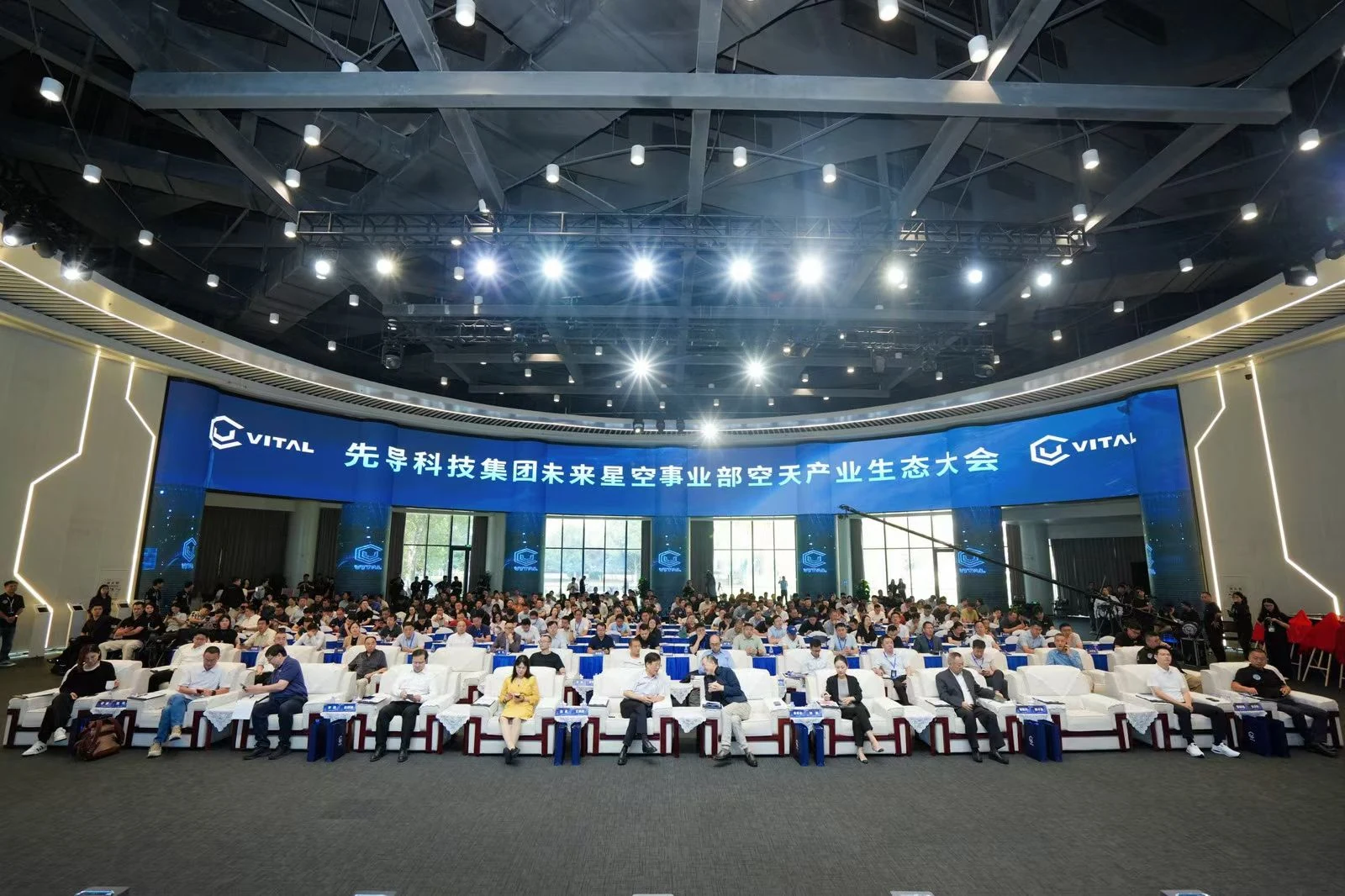
Future Space division and Vital PoleStar headquarters inaugurated
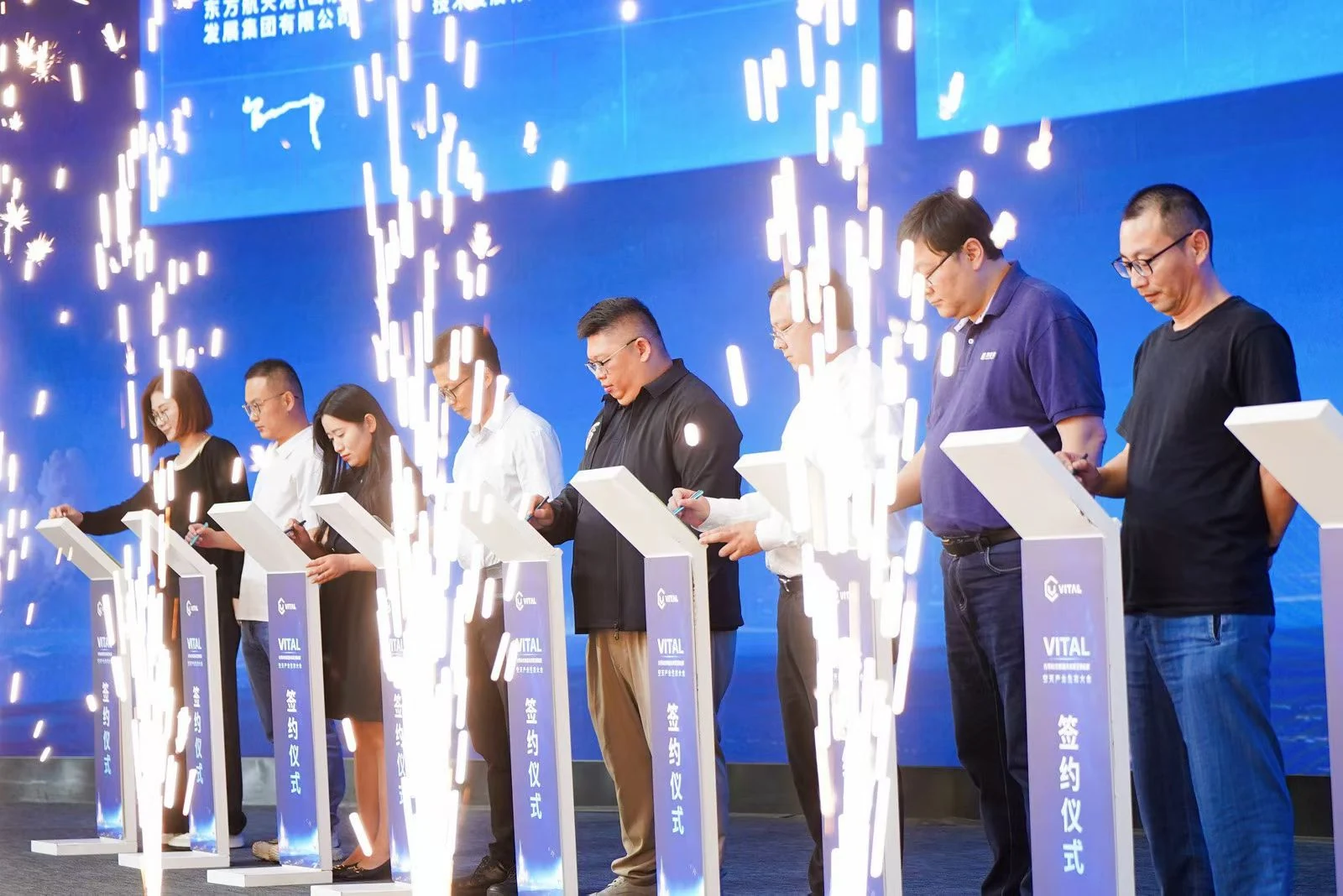
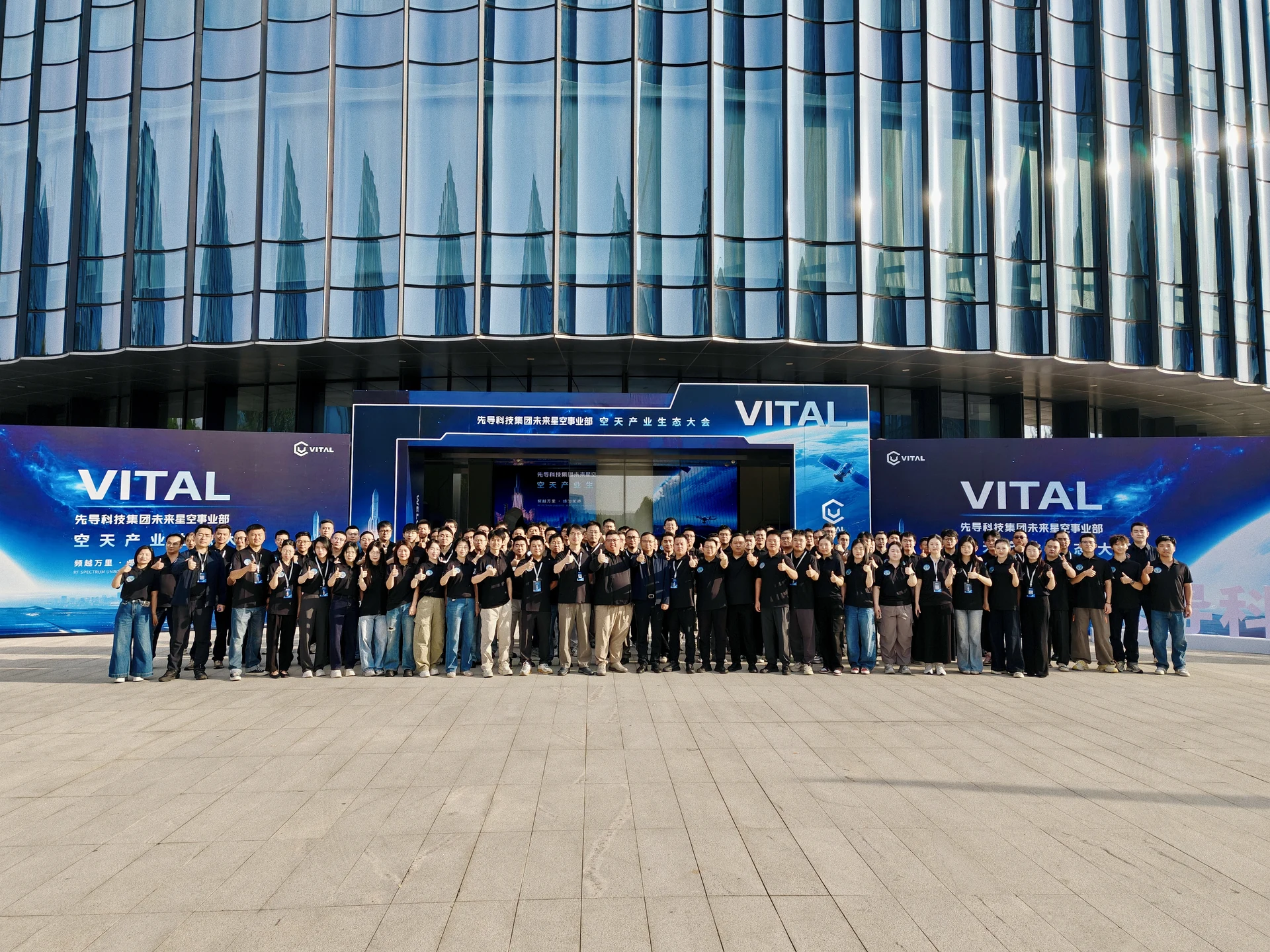
On September 16, Vital Materials Group held the launch of its Future Space division and an aerospace industry ecosystem conference at the Zhong'an Chuanggu Global Roadshow Center in Hefei. Representatives from Anhui Province, Hefei, Hefei High-Tech Zone and other local governments joined approximately 200 companies, universities, research organizations and investment institutions from commercial space, the low-altitude economy, semiconductors and optical communications to witness the ribbon-cutting ceremony for the division and Vital PoleStar headquarters.
The Future Space division is Vital Materials Group's business segment for commercial space and the low-altitude economy, with Anhui Vital PoleStar Xtreme HEMT Technology Co., Ltd. as its core business platform. It connects the Group's upstream capabilities in minor metals, compound semiconductor substrates and epitaxy, RF chips, optical chips, infrared and spectral chips and solar cells with Vital PoleStar's integration capabilities from devices through payloads to complete systems, providing satellite manufacturers and application companies with supply from materials to payloads.
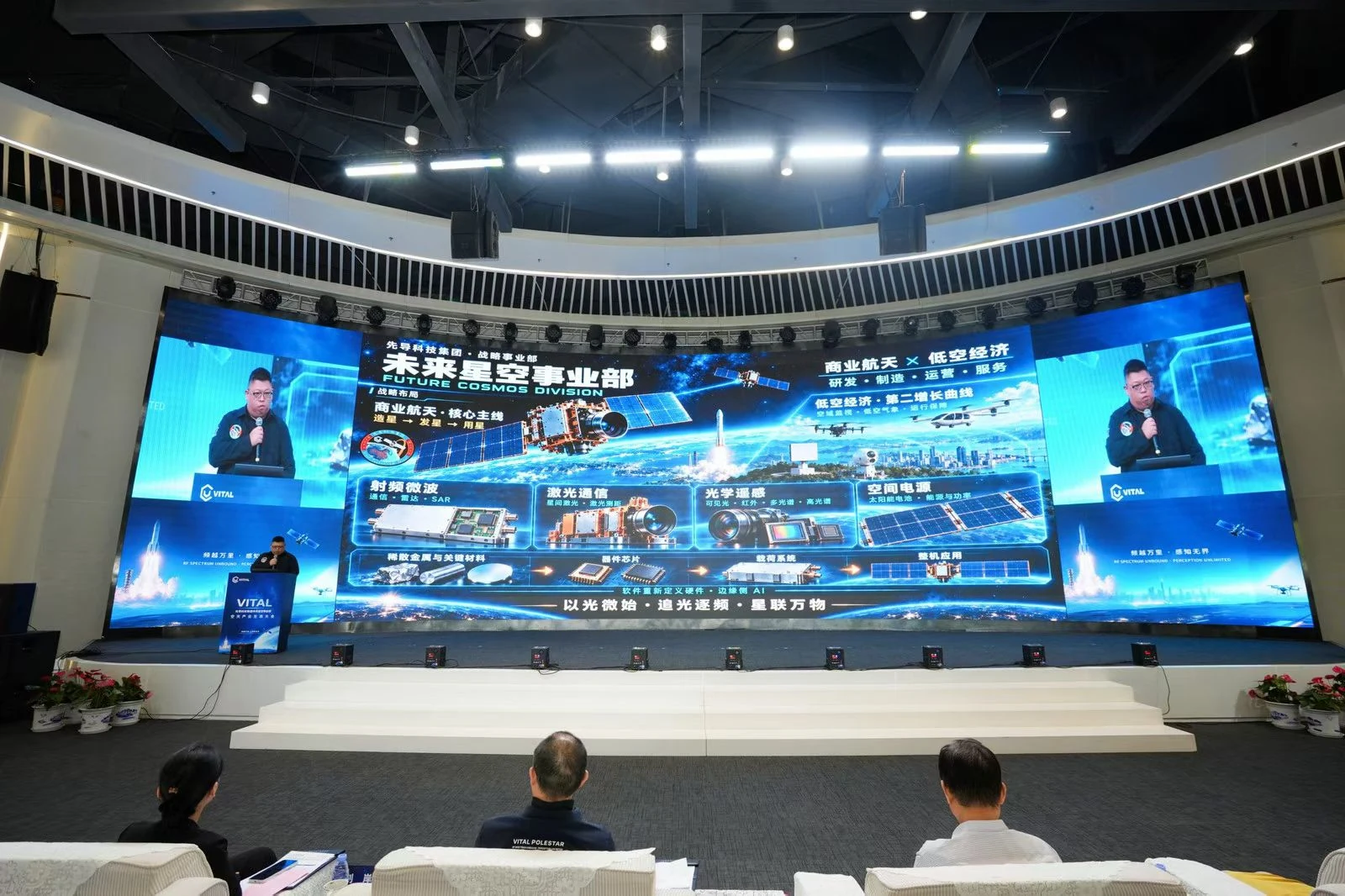
Connecting materials, devices and the aerospace value chain
In his address, Vital Materials Group Chairman Zhu Shihui said four developments are occurring simultaneously: commercial space, optical communications driven by AI computing, memory and processing-in-memory, and computing satellites. All begin with materials. He described indium phosphide as a shared foundation for RF, optical communications and computing satellites, adding that gallium, arsenic, indium, phosphorus and germanium make Vital Materials relevant to almost everything sent into space. The Group is also among the few technology companies in China with an end-to-end chain spanning primary production, product R&D and manufacturing.
He said the Group will continue investing in Hefei and work with partners to connect materials, devices and payloads with satellites, terminals, launch services and applications, helping Hefei build an aerospace information industry cluster with national influence.
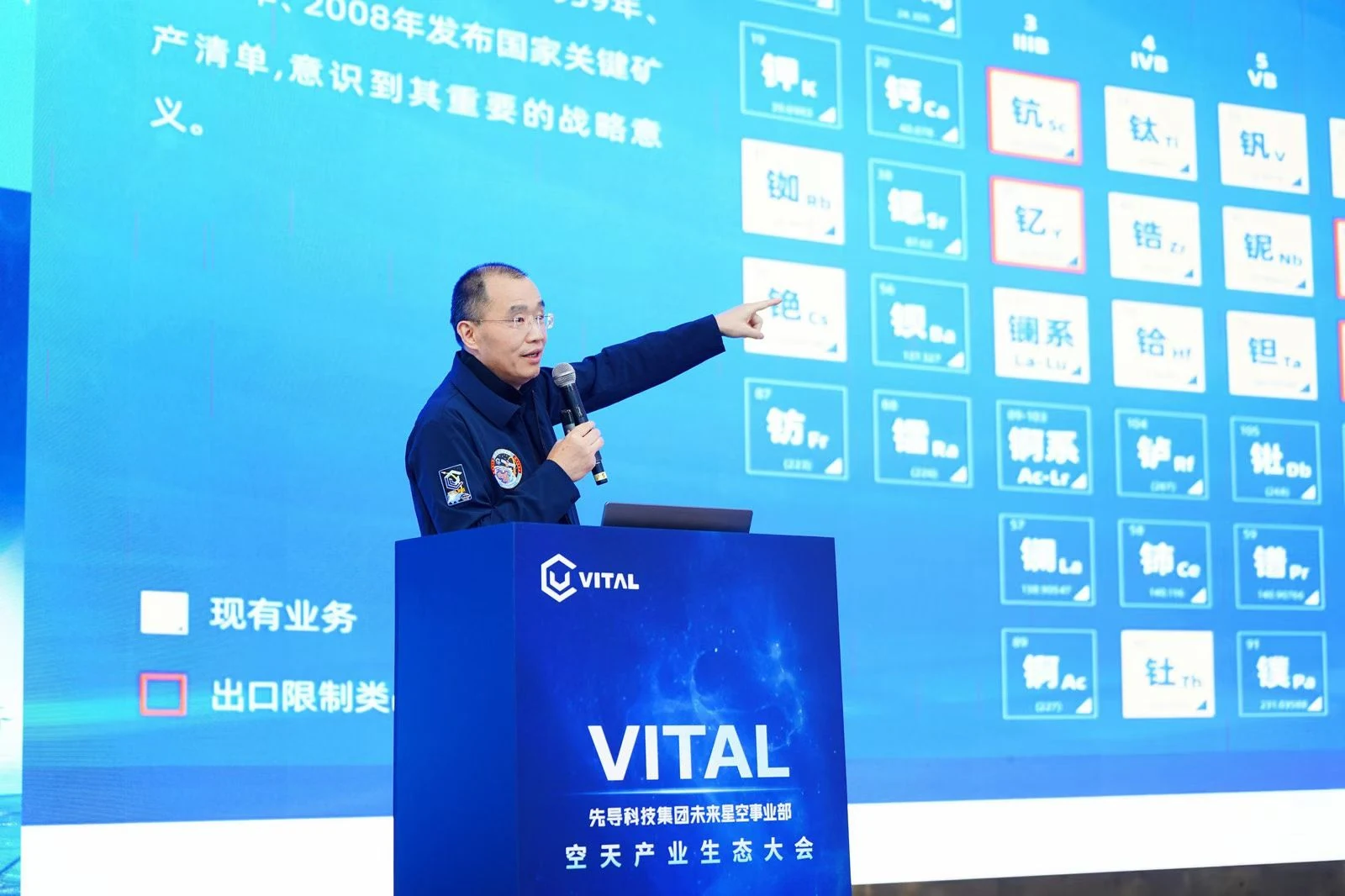
Consistent delivery for volume manufacturing
Yingqi Zhan (William), head of the Future Space division and General Manager of Anhui Vital PoleStar, said commercial satellites are moving from individual development to volume manufacturing. Upstream suppliers must now demonstrate consistent delivery to a common standard, rather than simply the ability to build one unit. The division brings the Group's aerospace capabilities together in one business platform, giving satellite manufacturers and application companies a single interface, production schedule and responsible entity. He emphasized that satellite reliability begins with materials, and that every device delivered by the division can be traced back to crystal growth.
Commercial space and low-altitude product launches
At the conference, Vital PoleStar launched products and system solutions for commercial space and the low-altitude economy. For commercial space, it introduced an S-band direct-to-device transmit/receive channel module jointly developed with Smarter Micro. The module incorporates two key advances: a transition from tile packaging to SiP, reducing profile thickness from 25–40 mm to less than 10 mm and weight from an initial 60 g to 1.3 g over three generations; and the combination of monolithically integrated transceiver chips with multilayer hybrid-laminate printed circuit boards. These developments support lighter satellite payloads and greater RF front-end integration, which both companies will continue pursuing.
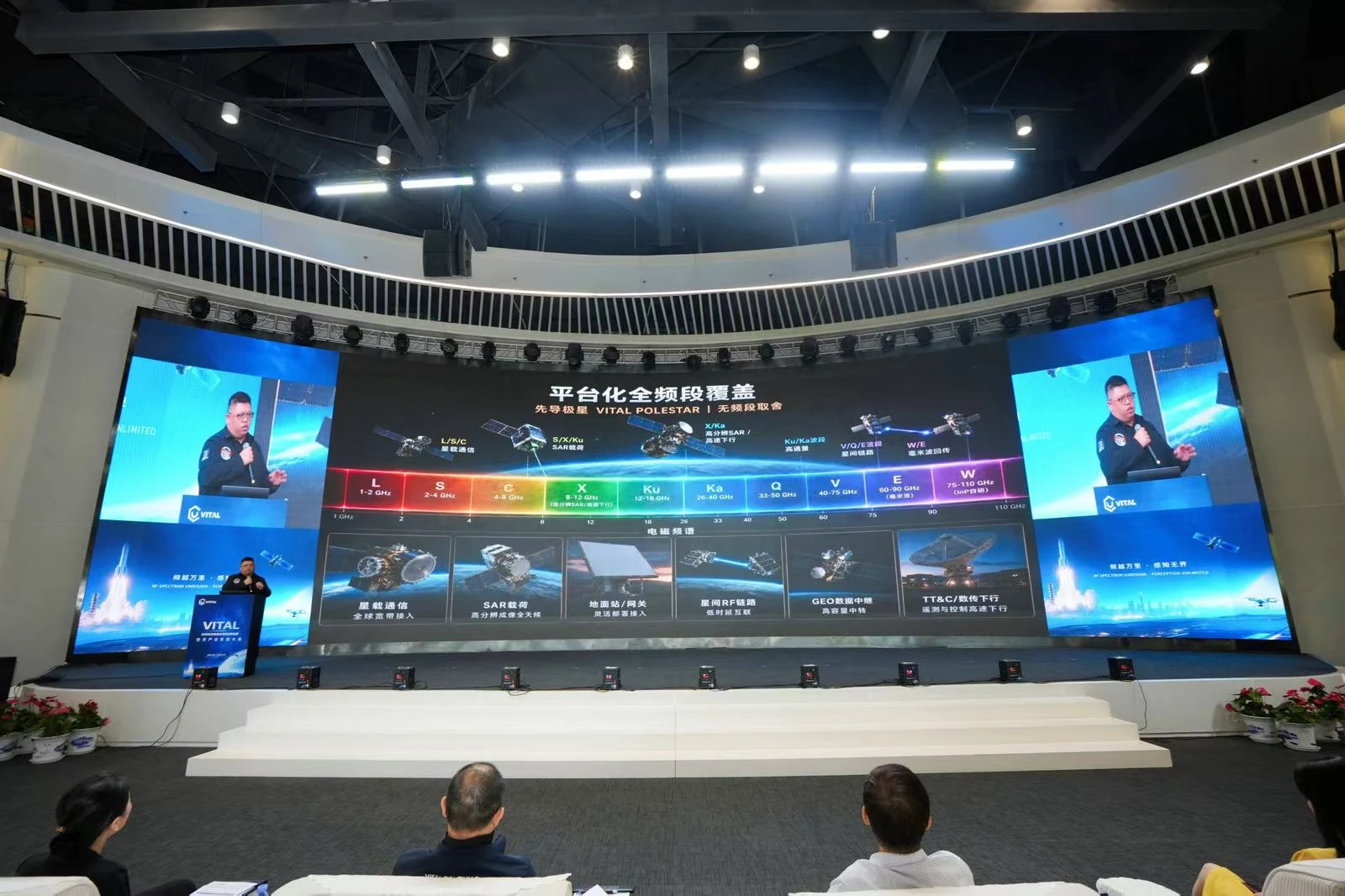
Also introduced were platform-based satellite RF payloads covering L through W bands. Low-altitude launches included a sensing system combining the TIANYU four-face 3.6 km short-range radar, electro-optics and satellite communications; a beyond-visual-line-of-sight satellite telemetry and control receiver terminal for hydrogen-powered UAVs developed with Xieqing and Geespace; and an SOS satellite emergency terminal developed with Hongda Satellite and Fanyue Technology.
Three system solutions with interactive demonstrations
Vital PoleStar also introduced three system solutions alongside interactive demonstration systems.
STARGAZER-SSA connects multi-target sensing, track sharing, fleet collision avoidance and mission recovery in one LEO satellite sensing, avoidance and cooperative scheduling system. Its orbital simulator supports detection-range requirements of 400, 550 and 800 km and replays emergency scenarios including multiple debris crossings, mixed obstacles and approaches from multiple directions. The constellation, single-satellite proximity and command-center views share one mission state.
The weather-based automatic obstacle-avoidance navigation system supports UAVs and electric vertical take-off and landing aircraft, combining weather radar, wind profiles, forecasts, terrain and obstacle data to assist route planning and dynamic avoidance.
The slope and dam monitoring system connects rainfall, surface deformation and subsurface response across a monitoring chain from regional screening to on-site verification. These demonstrations are engineering simulations and application illustrations; constellation spatial relationships are calculated from public orbital data.
36 strategic agreements and new innovation platforms
The Future Space division signed 36 strategic cooperation agreements across commercial space, the low-altitude economy, and tripartite research institutes and universities. Vital Materials Group and Hefei High-Tech Zone agreed to establish the Anhui Vital Jiasheng microelectronics base. Vital PoleStar partnered with Hefei Guoxian Holdings and the Hefei Scenario Application Innovation Promotion Center on application development and ecosystem collaboration, focusing on low-altitude surveillance, weather monitoring and slope/dam monitoring.
Vital PoleStar signed agreements with Zhejiang Geespace and Xieqing (Shanghai) New Energy Technology covering NTN and X-, Ka-/Ku-band in-orbit validation, hydrogen-powered UAVs and beyond-visual-line-of-sight satellite telemetry and control. It also signed a strategic agreement with Guangzhou Smarter Microelectronics for joint development of RF electronic chips for satellite communications and optical interconnects, combining compound semiconductor materials and devices with RF front-end chip design capabilities.
A tripartite agreement with Xieqing and Smarter Micro covers joint development of hydrogen-powered low-altitude aircraft and RF communications payloads. Together, these agreements establish a collaboration network across satellite communications, UAV platforms and RF chips. The conference also inaugurated the Guangzhi–Vital PoleStar–CEPREI Counter-UAS Capability Research Center, the Guangdong University of Technology–Vital PoleStar Low-Altitude Information Technology Joint Laboratory, and the Kexiaowan–Vital PoleStar Industrial Innovation Base.
Space-air-ground industry integration discussions
That afternoon, a closed-door executive summit on space-air-ground industry integration took place in Hefei High-Tech Zone. Government representatives joined Smarter Micro, Xieqing New Energy, BOE, EHang, Geespace, Oriental Starlink, Guanyu Xinsuan and other companies. The zone also held an investment promotion event outlining aerospace information and low-altitude economy policies and local support. Parallel commercial space and low-altitude roundtables discussed supply-chain coordination for volume satellite manufacturing, payload interfaces and mutual recognition of validation, low-altitude infrastructure and applications.
Building an aerospace ecosystem from Hefei
The formation of the Future Space division marks Vital Materials Group's expansion from materials and devices into commercial space and low-altitude payloads and systems. Based in Hefei, Vital PoleStar said the division will work with its partners to advance commercial satellites from individual development to volume manufacturing and build an ecosystem spanning materials, devices, payloads, satellites, terminals and applications, in support of Hefei's ambition to become a global center for deep-space exploration.
About Vital Materials Group
Founded in 1995, Vital Materials Group focuses on minor metals, microelectronics and optoelectronics. It is the world's largest minor-metal materials manufacturer and China's largest supplier of compound semiconductor substrates and infrared materials, with a value chain spanning materials, compound semiconductors, chips, devices and modules, complete systems and recycling. A satellite named after Vital Materials successfully entered orbit in September 2025.
About Anhui Vital PoleStar
Anhui Vital PoleStar Xtreme HEMT Technology Co., Ltd. is Vital Materials Group's core platform for commercial space and the low-altitude economy, headquartered in Hefei High-Tech Zone. It designs GaAs, GaN and InP RF devices and InP high-speed DAC/ADC chips, and integrates assemblies, payloads and complete systems for commercial satellites, low-altitude applications, radar and test and measurement.
Sources: conference news release and event materials. Event date: September 16, 2026.